
The Meaning of Selective Biological Control
Silent SpringThis flow follows the contrast between indiscriminate killing and interventions designed around the target organism’s biology.
increasing Bearing strength in each event
 decreasing
Bearing strength in each eventdecreasingA Broad Weapon Is Chosen

Killing Beyond the Target
A Simplified Objective
Many programs sought to eliminate a named insect or plant through chemicals that killed broadly. The target became the sole measure of success, while other organisms and relationships were treated as incidental.
A Hidden Assumption
This approach assumed the environment could absorb repeated insults without changing. Carson challenges the belief that a poison’s effects stop at the boundary of its intended application.
Natural Enemies Are Lost

Control Weakens Itself
Predators and Parasites Decline
Pesticides can kill natural enemies that keep pest populations in check. Their removal may allow target species or previously minor pests to increase.
A Reversal of Purpose
The method meant to simplify control can make future control more difficult. Carson’s cases show that ecology is not background scenery but part of the mechanism by which populations are restrained.
Biological Specificity Emerges
Use the Pest’s Relationships
A Focused Approach
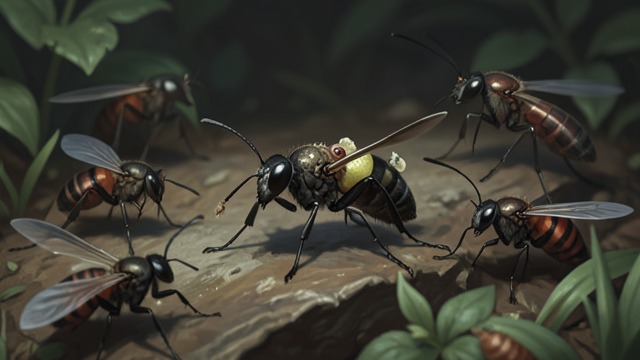
Parasites, predators, and disease organisms may affect particular pest species or groups. Their selectivity can reduce damage to organisms outside the intended target.
Research Is Essential
Biological methods are not automatic solutions. Carson calls for careful study of the whole community so that a new control agent does not create a different imbalance.
Integrated Programs Take Shape
Combine Methods Carefully
Minimum Necessary Treatment
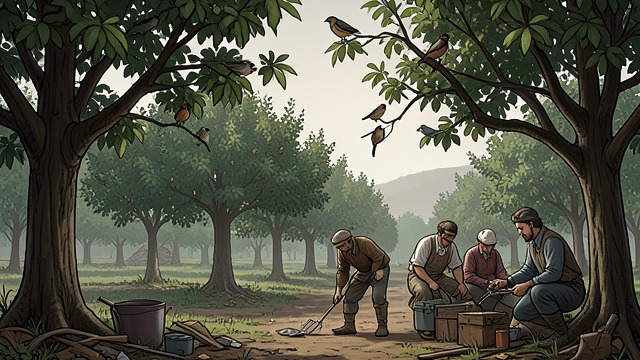
A. D. Pickett’s orchard program used natural enemies, careful timing, and reduced chemical doses. It sought enough control to protect crops without destroying beneficial species.
Practical Results
The growers achieved competitive yields at lower insecticide expense. The example showed that ecological restraint could be practical rather than merely idealistic.
A New Definition of Success
Accommodation Instead of Eradication
A Shared Landscape
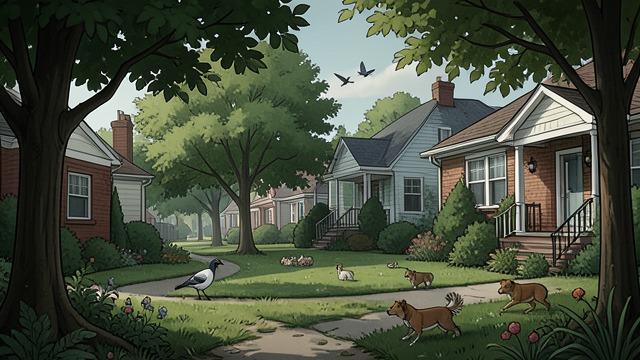
Carson’s proposed direction accepts that people live among other organisms and depend on the systems those organisms help maintain. An insect-free world is neither a realistic nor a safe goal.
Knowledge Guides Action
Success means managing specific problems while preserving ecological resilience. The book ends by making humility, research, and selectivity the standards of responsible intervention.
As synthetic pesticides spread after the Second World War
After repeated broad-spectrum applications
In the examples of natural enemies and pathogens
In Pickett’s Nova Scotia orchard work
At the final pages of Silent Spring
